NAPA: Napa's own art center is coming home, by way of a dinner held 180 years ago. Di Rosa Center for Contemporary Art announced on Tuesday, Nov. 3, that its San Francisco gallery will conclude its program on Feb. 6, 2027, closing out a run of five exhibitions over 18 months. That last show is Invaders, and it opens on Saturday, Nov. 7, at Di Rosa SF, the center's gallery at 1150 25th Street in San Francisco, with a public opening reception that evening from 5 to 7 p.m. Its full title, Vallejo, Food, and the Making of California, names the territory the work moves through: one dinner in 1846, and everything that meal set in motion.
Di Rosa SF opened on Aug. 2, 2025, inside Minnesota Street Project, the arts campus in the city's Dogpatch neighborhood founded in 2016 by Andy and Deborah Rappaport. The San Francisco rooms carried the center's collection of Northern California art to a city audience. When the last show closes, the center says, its full focus returns to the campus in Carneros where it began.

A meal as the argument
Invaders pairs Interrupted Passage, a long running food based project by Julio César Morales and Max Rivière-Hedrick, with significant works from the di Rosa permanent collection, in a presentation the center describes as the most expansive view of the project to date. The work treats a meal as a site of political negotiation and cultural exchange. Its starting point is a feast hosted in 1846 by Mariano Guadalupe Vallejo, the Mexican general who stood at the center of California's passage from Mexican to American rule.
The last San Francisco show is a dinner party from 1846, restaged as an argument about who belongs in California.
To restage that meeting, Morales and Rivière-Hedrick cook and serve meals that run a full eight hours, presenting them to audiences at sites on both sides of the border, in Mexico as well as in California. Two decades into the project, the San Francisco showing gathers video, sculpture, photography, and ephemera, adds live food activations, and brings new photographs and a new video and sound installation. The exhibition is presented by di Rosa together with the Minnesota Street Project Foundation, and it runs through Feb. 6, 2027, with gallery hours Thursday through Saturday, 11 a.m. to 6 p.m.
The program around the show keeps returning to the table. An interactive artist talk is set for Saturday, Dec. 5, from 5 to 7 p.m. The run then closes the way the work itself would suggest: on Feb. 6 at 7 p.m., a ticketed multi course experimental dinner titled Invaders at the Table takes up the themes of the exhibition, invasion, settlement, migration, and cultural exchange, in the form of a meal. Tickets are listed at $175.
What waits in Carneros
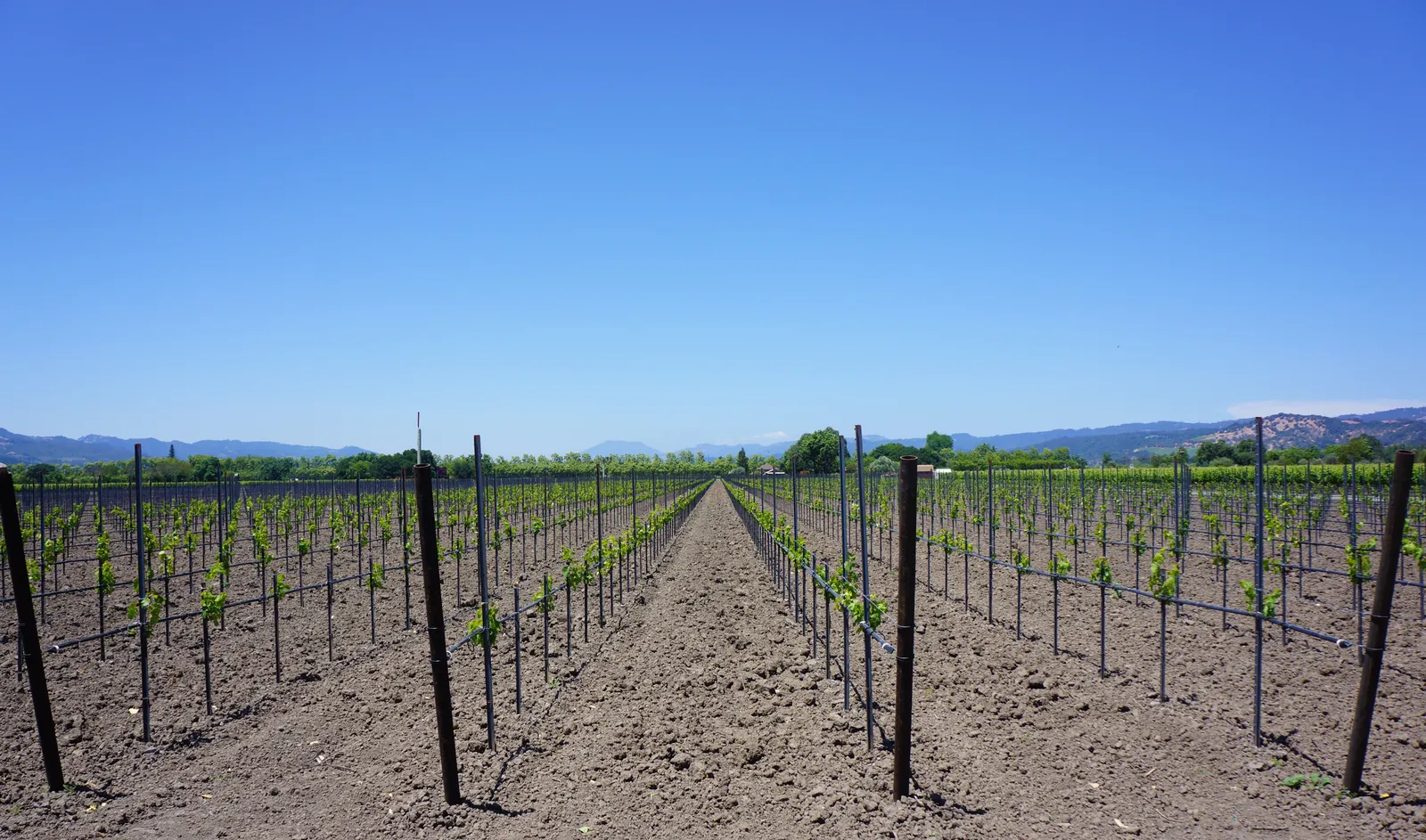
The home campus, at 5200 Sonoma Highway, is a different kind of gallery altogether: galleries, a sculpture meadow holding nearly 80 outdoor artworks, and a lake, set in the Carneros countryside. The center, founded by Rene and Veronica di Rosa, holds more than 1,600 works and describes its collection of Northern California art as the world's foremost. Rene di Rosa began welcoming the public onto the property in 1997, framing the place as ground where art and the natural landscape would be kept together, and the center still states its mission in those two words.
The return also lands in the middle of a new chapter at home. In August 2026 the center announced an agreement with the Napa County Regional Park and Open Space District and the Land Trust of Napa County to protect some 162 acres of its land, including Milliken Peak, permanently as public open space, with a public hiking trail planned where the center intends to place additional sculptures. The San Francisco experiment, in other words, ends just as the Napa ground it all stands on is being secured for the long term. The city got five exhibitions. Carneros gets the institution back, whole.