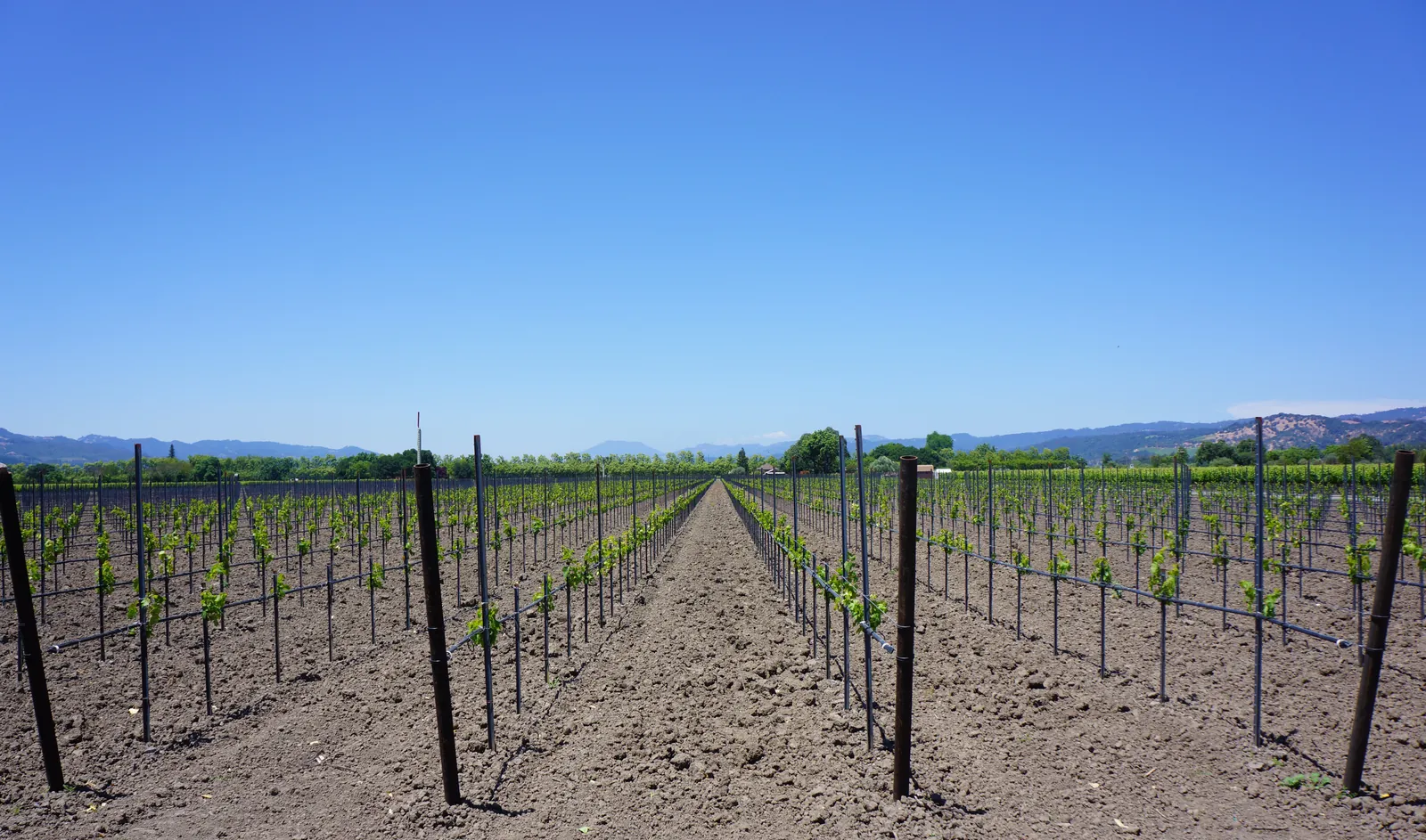
NAPA: The plan comes first, and now the plan is free. Napa Green announced on Oct. 19 that it is making Carbon Farm Plans available to growers across the Napa area at no cost, using a $3 million grant from the National Association of Conservation Districts (NACD), under its Advancing Markets for Producers program. Napa Green said over $2 million of the award will go directly to local growers to put regenerative practices in the ground.
A Carbon Farm Plan is a whole-farm roadmap. In Napa Green's description, it sets out how a property can pull more carbon into its soil while guiding the management of land, water, soil, and wildlife alongside the farm's working needs. The plan also does a second job in this program: Napa Green said the Carbon Farm Plan serves as the conservation plan a grower needs in hand to access the grant funding itself, which is why the organization is leading with the offer.
"The Napa Green goal is to enrich the community and increase the resilience of the land, and we want to make that accessible to all growers," said Ben Mackie, Napa Green's Vineyard Program Director. "We would love to work with each one of you so, please don't hesitate to reach out." Napa Green said the free plans are limited in number and will be taken up first come, first served, and it urged growers to complete its interest form soon.
The Napa Green goal is to enrich the community and increase the resilience of the land, and we want to make that accessible to all growers.
What the money can pay for
The list of practices the funding can support runs to the working core of regenerative farming: compost or biochar, cover cropping, no-till management, prescribed grazing, and new hedgerows. Fallow fields are eligible for funding as well, a detail that matters in a valley where some ground is sitting out the market. Napa Green framed the offer against a harder growing climate on California's North Coast, pointing to more frequent and more intense extremes, from heat spikes and drought to atmospheric rivers, along with worsening disease and pest pressure, and noting that most of the region's vineyards are family owned or smaller in scale.
The outcomes Napa Green says it is aiming for are soil-deep ones: less erosion, ground that holds more water, fewer chemical inputs and less energy use, and a wider mix of beneficial insects and birds across the farm. In the organization's account, farms that build soil and ecosystem health this way protect their own viability and longevity, and hand healthier vineyards on to the next generation.
The grant behind the offer
The award itself is not brand new. Napa Green first announced the $3 million NACD grant on Sept. 3, describing the same structure, with $2 million directed to growers for a familiar set of tools: hedgerows, rotational grazing, no-till methods, cover crops, and applications of compost and biochar. The Oct. 19 announcement is the program opening its doors: the planning help that unlocks the money is now being offered free, while the supply lasts.
Napa Green is a Napa Valley nonprofit that certifies vineyards and wineries against science-based standards it describes as built on more than 250 best practices, and that works alongside growers to turn those standards into daily practice. In its Sept. 3 announcement, the organization said that in 2025 it helped more than 60 of its regenerative certified vineyard members in Napa County drop glyphosate-based products, one step in a campaign to eliminate synthetic herbicides by the close of 2027.
What a plan looks like on the ground
Napa Green's own account of an early Carbon Farm Plan, written for Silenus Winery, shows the shape of the document. Silenus, farming about 7 acres of estate vineyards, was among the first Napa Green properties to build a custom plan with the Napa County Resource Conservation District and the NRCS. Its plan's leading practices were compost applied across 6.3 acres, hedgerow planting on 1.52 acres, and wider cover cropping. Across the plan's full list of practices, the estimated total came to 886 tons of carbon dioxide equivalent sequestered over 20 years.
That is the arithmetic now on offer to the wider valley, at no charge for the plan itself. Growers who want one of the free plans are being directed by Napa Green to its website and interest form, and the clock the organization set is a simple one: when the funded plans are spoken for, the offer closes.